Hire UGC Creators Without Getting Overcharged

· 14 min read

Most UGC creators charge $75 to $500 per video as of July 2026, and the number that decides where you land is the usage license, not the follower count [1]. Two creators with wildly different audience sizes quote the same figure for the same organic-only brief, because pricing tracks the deliverable. Whito's July 2026 UK research puts usage rights, format, and exclusivity ahead of audience size in explaining the spread between two quotes [2]. Below: what a rate card actually prices, the three 2026 rate bands, the license clause that doubles a quote, four sourcing routes priced against turnaround, the platform fee models that sit on top, and the five traps that produce bad invoices.
What a UGC rate card actually prices
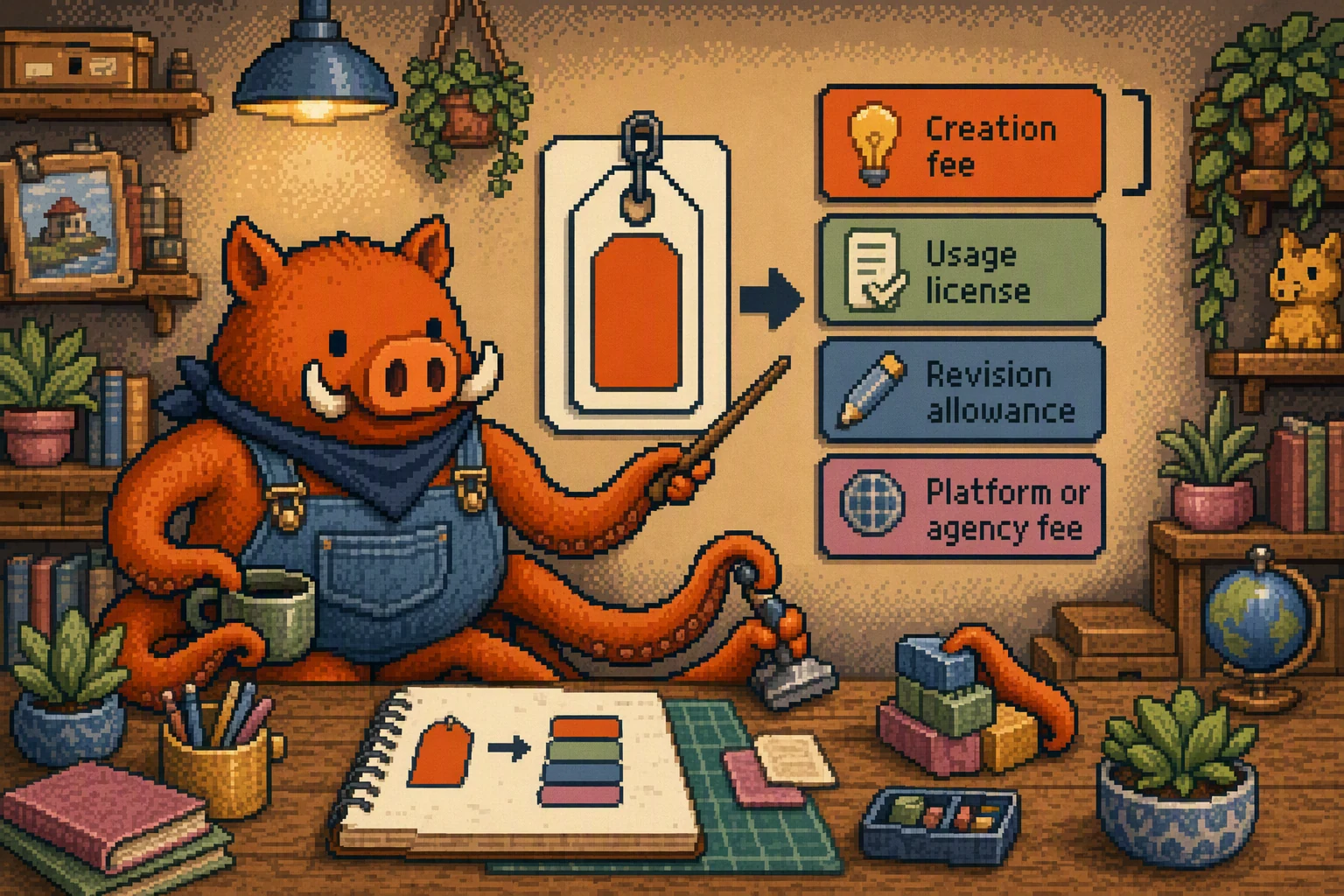
A UGC rate card is a creator's published price list for branded content, and it prices four separate things: the creation fee for shooting and editing, the usage license that sets where and how long you may run the asset, the revision allowance, and the platform or agency fee stacked on top. The headline per-video number covers only the first.
That base fee runs $75 to $500 and up by experience, and it buys organic use only; paid-ad reuse is billed as a separate add-on [1]. Two quotes carrying the same headline number can be worth double or half of each other once the license line is filled in.
Read any quote as four lines:
- Creation fee: concept, shoot, edit, one delivered video. Priced on the creator's experience and the shot list.
- Usage license: channels, geography, term. Organic-only, three-month paid, twelve-month paid, whitelisting.
- Revision allowance: rounds included before the hourly clock starts. Two is the working standard, and one is a trap on a complex brief.
- Platform or agency fee: the marketplace cut or agency retainer sitting on top of all three.
Ask for those four numbers separately before you compare anyone you plan to hire. A creator who cannot split the quote has not priced the license. You will pay for it twice.
Octohog
The rate is the easy part. The right creator is the work.
Octohog ranks an index of 177,000 TikTok creators against your brief and shows the brand work each one has actually shipped. Brief to shortlist in one sitting.
Match my brand7-day free trial
2026 rates moved on usage rights, not follower count
Follower count barely factors into UGC pricing the way it drives traditional influencer rates [1]. Usage rights, format, and exclusivity terms explain far more of the spread between two quotes than audience size alone, per UK creator-rate research published in July 2026 [2]. Two creators with very different audiences can land on the same price for the same organic-only brief.
The reason is structural. A UGC creator sells footage the brand distributes, so the brand's own media budget carries the reach. Audience size is not part of the deliverable. What is part of the deliverable is the term: how long you may run the asset, on which channels, and whether the creator is barred from filming for a competitor while you do.
License terms are also the part of the quote that compounds. A creation fee is charged once per video. A license renews. When a three-month window closes on an ad still spending, you either re-license the asset or switch off a creative that works, and renewal is where the back half of a UGC budget hides.
Follower minimums in a UGC brief filter out the exact people worth hiring. Since audience size is not part of what the brief buys, the stronger screen is hook variants, turnaround, and how flexibly the creator writes a license. A creator with a small feed who delivers three hooks and a clean twelve-month paid grant beats a large account selling one organic post, and the invoice is smaller.
Before you hire UGC creators for the next quarter, pull your last five creator invoices and mark which line moved the total: the fee or the term. That answer tells you where the negotiation actually is.
Set your rate band before you send the brief
Per-video rates cluster in three tiers as of July 2026: $75 to $150 for new creators, $150 to $350 for intermediate creators, and $350 to $500 and up for experienced specialists [1]. Decide which tier your brief belongs in before you write the brief, because the brief is what moves you inside the band.
The three tiers buy different amounts of work, not different amounts of talent.
| Tier | Per-video band | What the band buys |
|---|---|---|
| New creator | $75-$150 | One video, one hook, one revision, organic-only |
| Intermediate | $150-$350 | Multiple hooks, edit to a written spec, two revisions |
| Experienced specialist | $350-$500+ | Niche credibility, scripting, three hook variants, fast turnaround |
Source: Hubfluence's July 2026 rate breakdown [1]
Four things push a brief to the top of its band: a script you wrote and expect followed, more than one hook variant, a same-week turnaround, and paid-ad rights. None of the four present, pay the floor. All four present, expect the ceiling of the tier above, and pay it without arguing. A creator quoting the floor for a brief with all four either misread it or plans to renegotiate after delivery.
Settle the ad-rights question before anyone names a price. Whether the brand can run the content as paid ads changes what the content is worth, so it belongs in the first message rather than the invoice dispute [2].
Write the band into the brief itself. A brief that says "organic-only, two hooks, one revision, $150-$350" gets priced replies inside a day. A brief that says "send me your rates" gets a week of email and a spread you cannot compare.
Price the usage license as its own line item
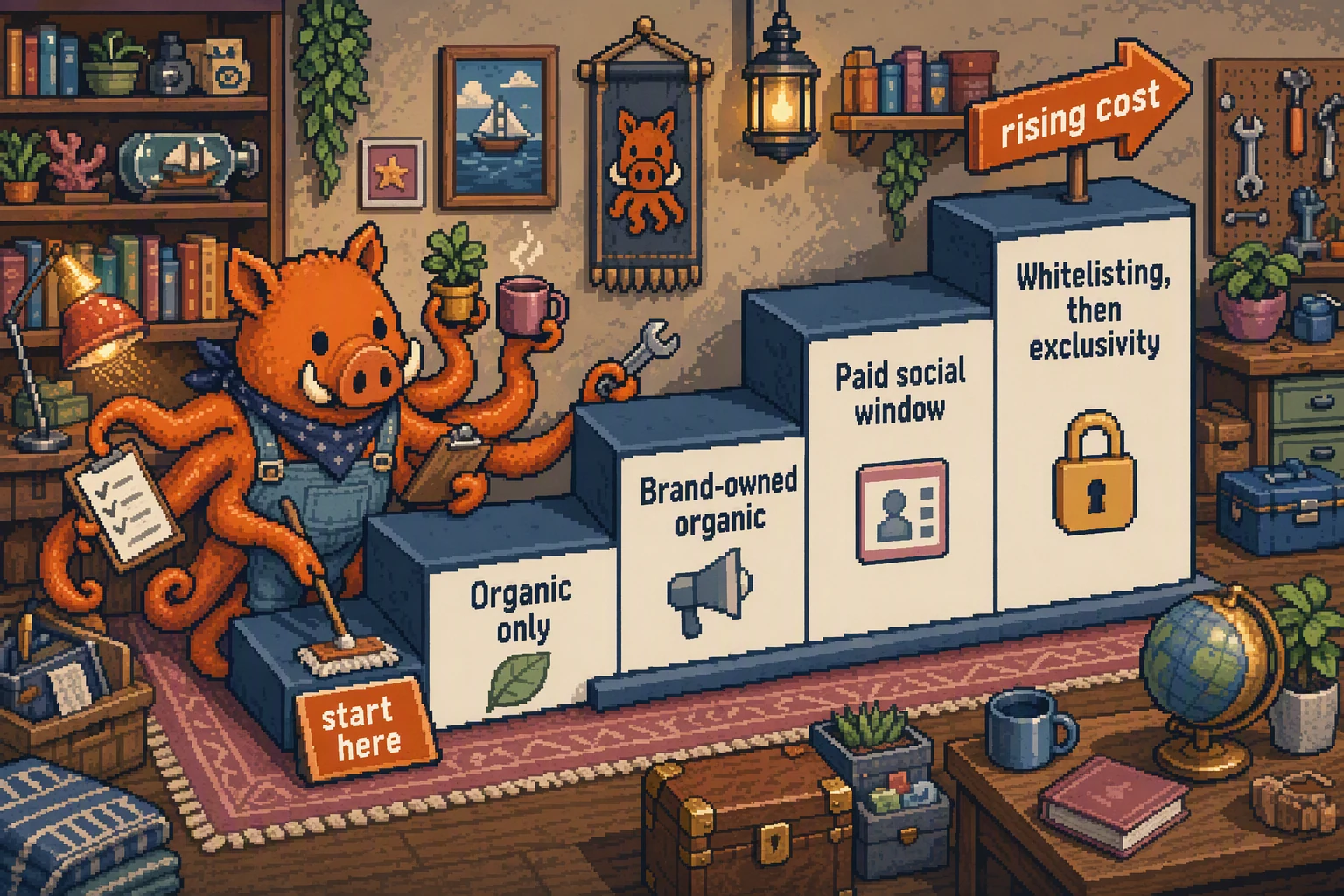
A usage license prices three variables: where the asset runs, how long it runs, and who else the creator may film for during that window. Charge the creation fee once. Charge the license per term, and charge it again when the term ends. Brands that fold the license into a single per-video number lose the ability to renew cheaply, because there is no separate line left to renew.
The same video carries a different price under each of the license terms brands actually request.
| License term | What the brand gets | Effect on the creation fee |
|---|---|---|
| Organic-only | Creator posts to their own feed, brand reposts | Baseline |
| Brand-owned organic | Brand posts on its own channels, no paid spend | Baseline plus a small step |
| Three-month paid | Asset runs in paid social for one quarter | Roughly half again |
| Twelve-month paid, all channels | Paid social, display, email, and site for a year | Roughly double |
| Whitelisting | Ads served from the creator's own handle | Double again |
| Category exclusivity | Creator declines competitor work for the term | Priced separately, usually the largest line |
Multipliers in that last column are our own pricing framework, not survey figures. Use them to sanity-check a quote, not to argue a creator down.
Whitelisting is a paid-ads setup in which the brand buys media against the creator's own account, so the creator's handle is the identity on the ad rather than the brand's. Exclusivity is the clause that quietly doubles a quote, and most brands buy it without needing it. Blocking a creator from an entire category for a year prices in every deal they can no longer take, and they will quote it that way. Buy category exclusivity only when a competitor using the same face would genuinely confuse your buyers. Below that, buy a term and let the creator work.
Marketplace fees sit on top of every row above. On the managed platforms that take a percentage of creator payments, the cut typically starts around 20% on an entry plan and falls into the high single digits to low teens on brand and agency plans, so the plan you booked under changes your landed cost per video before a single rate is negotiated.
Put the license in the brief as a dated window, not a word. "Twelve months paid social, ending on a named date" is a line a creator can price. "Full usage" is a line they will price at the ceiling, and they are right to.
Cap revisions at two and write the cap into the contract
Two revision rounds is the ceiling worth paying for. Marketplace terms and most creator agreements stipulate one or two included rounds, and everything past that gets quoted as new work rather than as a fix. Write the allowance into the contract anyway. A revision policy that lives in a Slack thread is not a policy.
Treat a third round as a fresh deliverable, because that is what it costs the creator: another shoot day, another edit, another delivery window against a creation fee already paid in full. Most creators bill an extra round as a share of that fee, and the share rises once the footage has been cut. Avoid any agreement promising "unlimited revisions" — the creator has priced that risk into the base rate, and you pay for rounds you never use.
Two details in the brief kill most revision requests before they exist. Name the hook variations you want in the brief itself, scripted line by line, instead of asking for "a different opening" after delivery. Then lock the deliverable specs: aspect ratio, length, wardrobe, where the product enters the frame, spoken audio versus on-screen text. Creative control belongs in the brief, not in the feedback round.
Find UGC creators through four sourcing routes, priced
Four sourcing routes exist, and they separate on all-in cost and turnaround rather than on catalogue size. Pick the one whose speed matches your testing cadence.
- General freelance marketplaces. $50 to $400 per video with a 2 to 7 day turnaround as of March 2026 [3]. Cheapest entry point, widest quality spread, and the vetting work falls entirely on you.
- Managed UGC platforms. $150 to $500 per video with a 4 to 8 day turnaround as of March 2026 [3]. The premium buys matching, brief templates, and a payment rail that holds funds until delivery.
- A UGC creator marketplace. Self-serve browse-and-book, priced per asset by the creator, with the platform taking a cut or a subscription on top. Turnaround sits between the two routes above because the creator is already opted in to brand work.
- Direct social outreach. No platform fee at all, the lowest per-video price you will negotiate, and the slowest path: sourcing, DMs, contracting, and payment are yours to run. Budget a week before the brief goes out.
Direct outreach wins on unit economics and loses on everything else, which makes it the wrong first move for a brand running its first paid creator test. Start on a UGC creator platform where the escrow, the contract, and the usage terms are already drafted, then move your best three or four performers to direct retainers once you know who delivers. The platform fee is tuition for finding them.
One caveat on the freelance route: a $50 video and a $400 video from the same marketplace are rarely the same product. The low end typically means one take, no revisions, and organic rights only, which prices out as fair rather than cheap. Compare quotes at matched deliverable specs or the ranges tell you nothing.
Turnaround is the variable most buyers underweight. If your creative testing runs weekly, a route with an 8-day floor puts you a full cycle behind before the first asset lands.
Best UGC platforms for creators and buyers, compared on fees
Platform pricing splits into two models, and the advertised per-video number belongs to only one of them. Per-asset marketplaces quote a price per video — commonly in the $60 to $90 range before add-ons — and the add-ons, rush delivery, extra hooks, paid usage rights, are where the real invoice forms. Subscription platforms quote per month instead, with self-serve access commonly starting in the $400 to $500 a month range, and that figure is entirely separate from what you pay the creators themselves. Some subscription platforms also require a three-month minimum, so the commitment is booked before a single video is.
General freelance marketplaces sit in a third position: no subscription, no minimum, a service fee on the contract value, and no vetting layer of any kind.
Here is what each route charges on top of the creator's own fee.
| Route | Platform charge | Sits on top of creator fee | Minimum commitment |
|---|---|---|---|
| Per-asset UGC marketplace | Per asset, roughly $60 to $90 | Rush delivery, extra hooks, paid usage | None |
| Managed marketplace with a take rate | Per asset, marketplace take rate | Rush delivery, paid usage, reshoots | None |
| Subscription platform, monthly | From roughly $400 to $500 per month | Full creator fee, paid ads licensing | Monthly plan |
| Subscription platform, term contract | Roughly $450 to $500 per month | Full creator fee | Three months |
| General freelance marketplace | Service fee on contract value | Nothing; creator sets the all-in rate | None |
The charge buyers miss most often is the one that never appears next to a per-video price: the subscription. A platform at roughly $450 a month across a three-month minimum is a four-figure commitment before content exists, and that cost has to be divided across every video you actually commission. Order four videos a quarter on that plan and the subscription costs more per asset than the creators do.
Creator network size is the weakest thing to shop on. A marketplace claiming tens of thousands of creators still surfaces a few dozen who match your niche, your language, and your delivery window, and that filtered pool is the only number that affects your campaign. Ask for the filtered count before you sign.
For brands commissioning fewer than ten videos a quarter, skip subscriptions entirely and buy per asset. Subscriptions earn their keep at volume and nowhere else.
Octohog
The rate is the easy part. The right creator is the work.
Octohog ranks an index of 177,000 TikTok creators against your brief and shows the brand work each one has actually shipped. Brief to shortlist in one sitting.
Match my brand7-day free trial
Where brands looking for UGC creators lose money
Five traps produce almost every bad UGC invoice, and they are cheap to fix in the brief.
Perpetual rights nobody uses. Buying forever-rights on an untested creator prices in a lifetime of value from an asset most brands stop running within a quarter. Buy the shortest term that covers your test window, then renew the winners.
Paying per video instead of per hook. Three videos from three creators cost triple. One shoot with three scripted hook variations costs the creation fee plus a modest per-hook add-on, and gives you cleaner test data because the creator is held constant. Same face, different opener.
Undefined deliverable specs. A brief without aspect ratio, runtime, and product-entry timing produces an asset that fails your ad account's requirements, and the fix arrives as a paid revision round.
Rush fees. Booking inside a creator's normal turnaround adds a surcharge to every video in the order. Most rush charges exist because the brand approved the brief late, not because the deadline was real.
Vetting on follower count. Follower requirements are the influencer model bleeding into UGC hiring, and they price the wrong thing. A UGC creator sells footage your brand runs on your own account; audience is not part of the deliverable. Vet on portfolio, lighting, delivery record, and whether their previous work looks like your product category.
Fix them in budget order. Under a few thousand a month, the perpetual-rights trap and the subscription lock-in cost you the most: a three-month minimum at roughly $450 a month is real money spent before content exists. Above that, hooks and specs matter more, because volume multiplies every brief defect you shipped.
Frequently asked questions
How do I apply to be a UGC creator on a marketplace?
Apply to a UGC creator marketplace with a portfolio of three to five sample videos, a niche you can name in one line, and a shipping address for product seeding. Most reviews resolve in days. No interview, no follower minimum: pricing on these platforms tracks the deliverable, not the audience, so nobody is counting your followers [1].
What should I budget per video for a first UGC test?
Budget the bottom of the band for a first organic-only brief — $75 to $150 per video is where new creators sit as of July 2026 [1]. Price the license as its own line from the first message, since ad reuse changes what the video is worth [2]. Raise the budget for the creators who earn a second order, not for the ones who simply delivered.
Do I own the video after I pay a UGC creator?
You own the video only if the contract says ownership transfers. Most creator agreements grant a time-limited license instead, and the creation fee covers organic use, with paid-ad reuse billed as a separate add-on [1]. Read the term and the channels. A signed brief with no license clause is a video you can post once and nothing more.
What is a fair rush fee for a 48-hour turnaround?
A fair rush fee is a percentage uplift on the creation fee, not a flat surcharge. Standard turnaround runs 2 to 7 days on general freelance marketplaces and 4 to 8 days on managed UGC platforms [3], so 48 hours compresses real work and deserves real money. A platform charging more than the video itself is selling scarcity.
Is a UGC creator cheaper than an influencer for paid ads?
Yes for asset production. Hiring a UGC creator buys footage and usage rights; hiring an influencer buys audience access, and follower count barely factors into UGC pricing the way it drives influencer rates [1]. Whito's July 2026 UK research puts the spread down to usage rights, format, and exclusivity instead [2]. Different inputs, different invoice.
What is the minimum campaign size worth running?
Three to five videos is the floor, because one video tells you nothing about which hook worked. At $150 to $500 per video on a managed platform [3], that is a $450 to $2,500 test. Buy fewer and you have bought assets, not a read on your creative. Budget for the second round before you commission the first.
References
- How much do UGC creators make? — hubfluence.io
- Influencer and UGC Rates UK 2026: What Creators Actually Charge — whito.co.uk
- How to Hire UGC Creators: Platforms, Pricing, and Red Flags — pixelpanda.ai